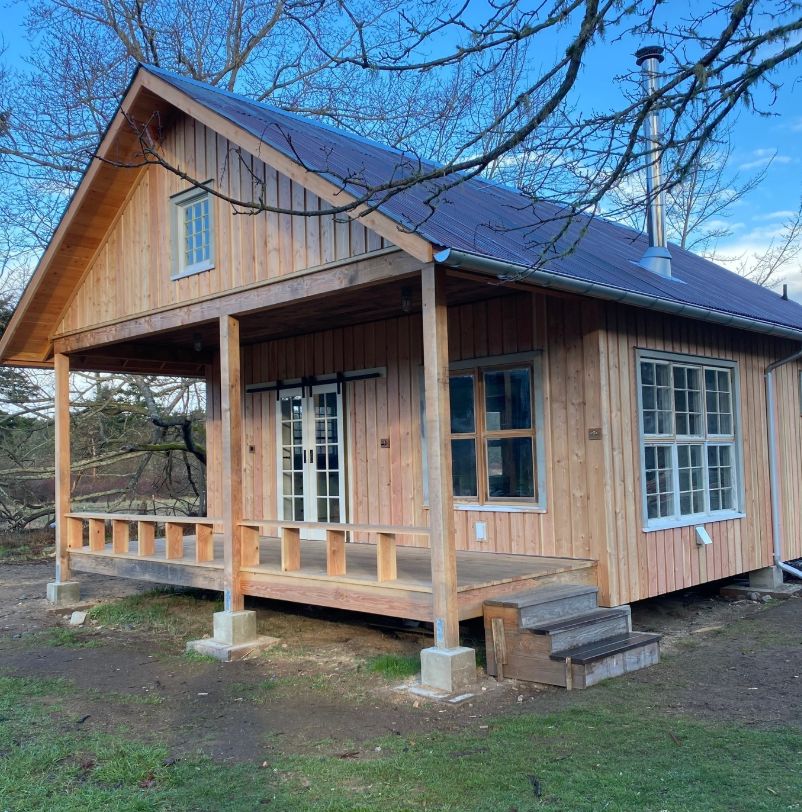
Mummified Cats and Old Newspapers
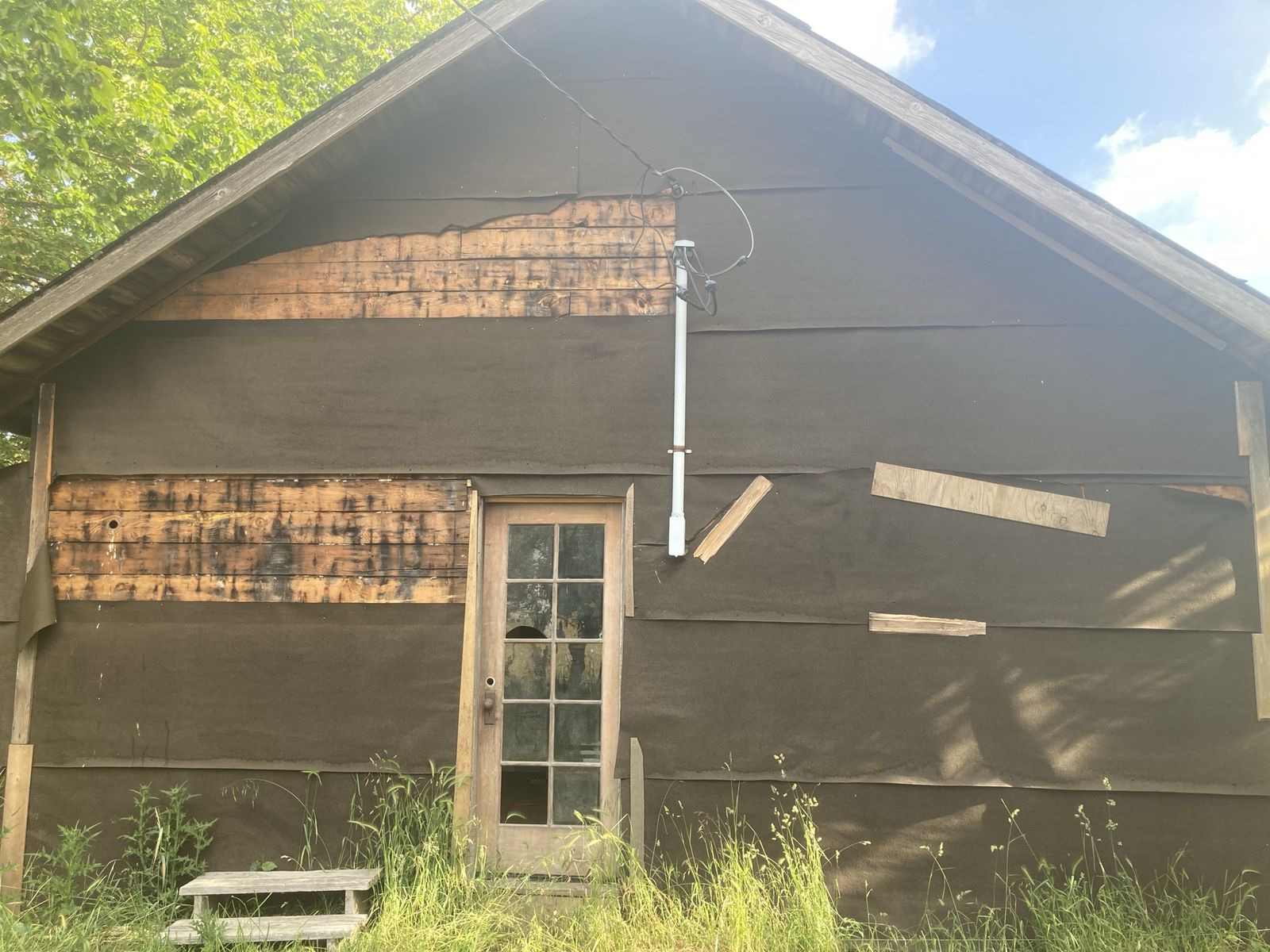
Some of my favorite months of my working life have been spent on jobsites, this was my favorite jobsite. The first time I saw it I laughed. The building looked back at me, or did the thing that buildings do that feels like being looked at. We had reached an understanding. I said okay. Okay, we are fixing this. What’s it going to take. A lot, it turned out.
I stood there with grass up to my knees, looking at a house that was built in 1910 and held together mostly by the idea of a building. Tar paper peeling off in strips, wood rotted through in places we didn’t know about yet. What a dump.
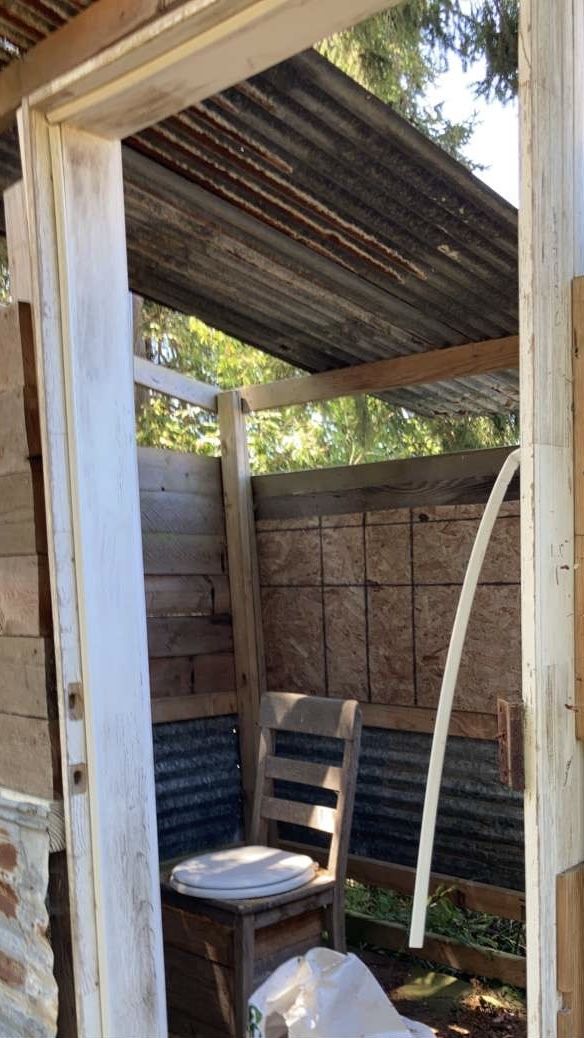
I had to take a shit. They pointed me across the field to a structure that was an old chair with a toilet seat screwed to the top. It sat out there in the grass. It matched the house. Architecturally they were in conversation.
It was my first year as a carpenter. I was Carl’s apprentice. Carl was patient with me. A real good guy. He had a sheet of Pokémon stickers. He awarded them to me when I did good. I still have one on my saw. There was another guy, Michael. They were the kind of guys who make you want to get better at things and who will, in the meantime, teach you every shaggy dog story they know.
I was living in a tent that summer, in the woods where I was building my own cabin.
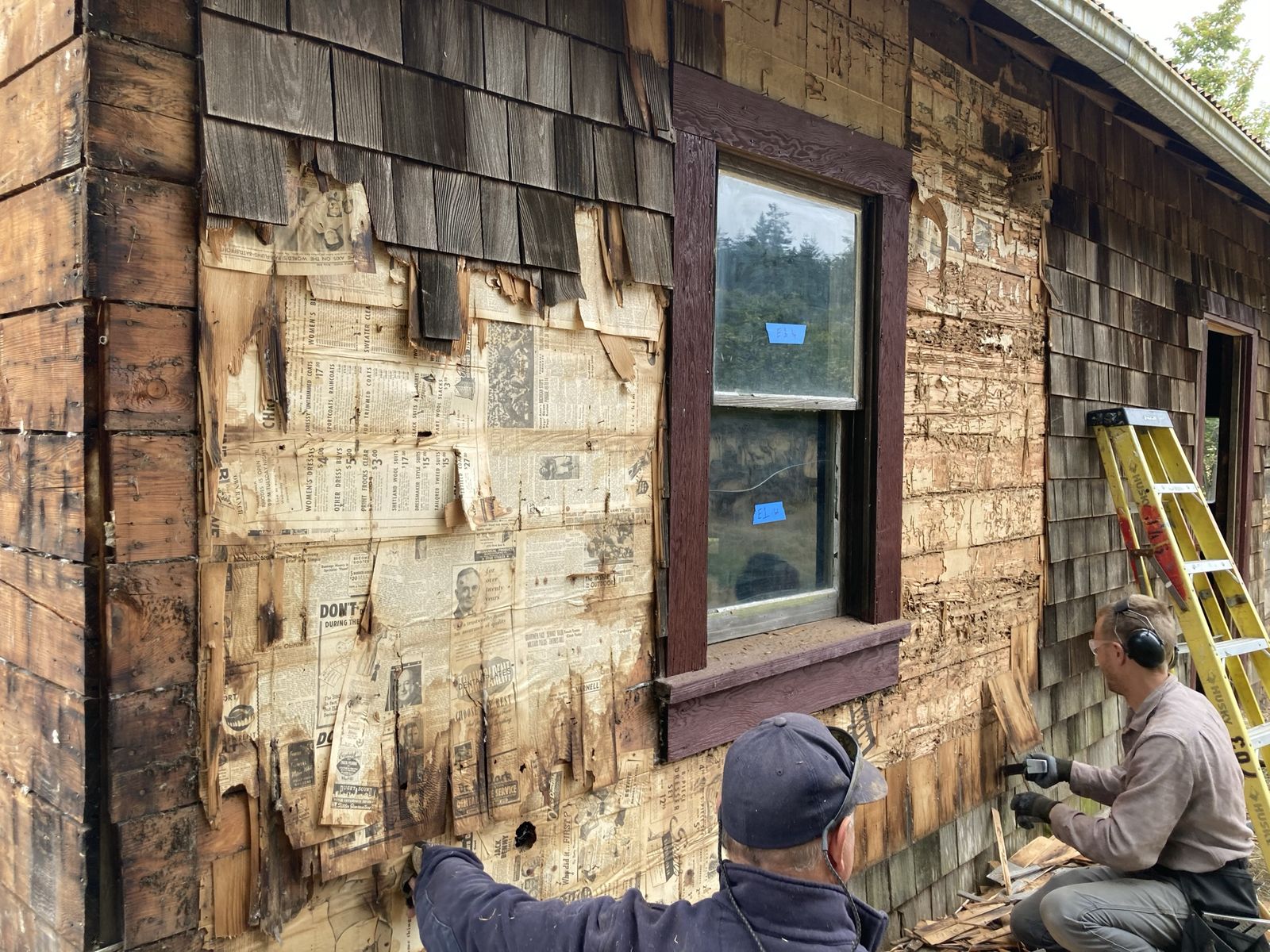
We stripped the cabin down to the bones. When we pulled the shingles off we found newspapers underneath, used as insulation. Common practice once. We stopped working. You have to stop when that happens. Someone had read these on the day they came out. Held them in their hands, folded them, nailed them to a wall, and the wall had kept them. Eighty years of snow and summer. The wall kept them in the dark. Now here we were standing in the light. The whole thing open. The newspapers in our hands. The man who had read them was long dead. His house was falling down. We were the ones who had come to finish it.
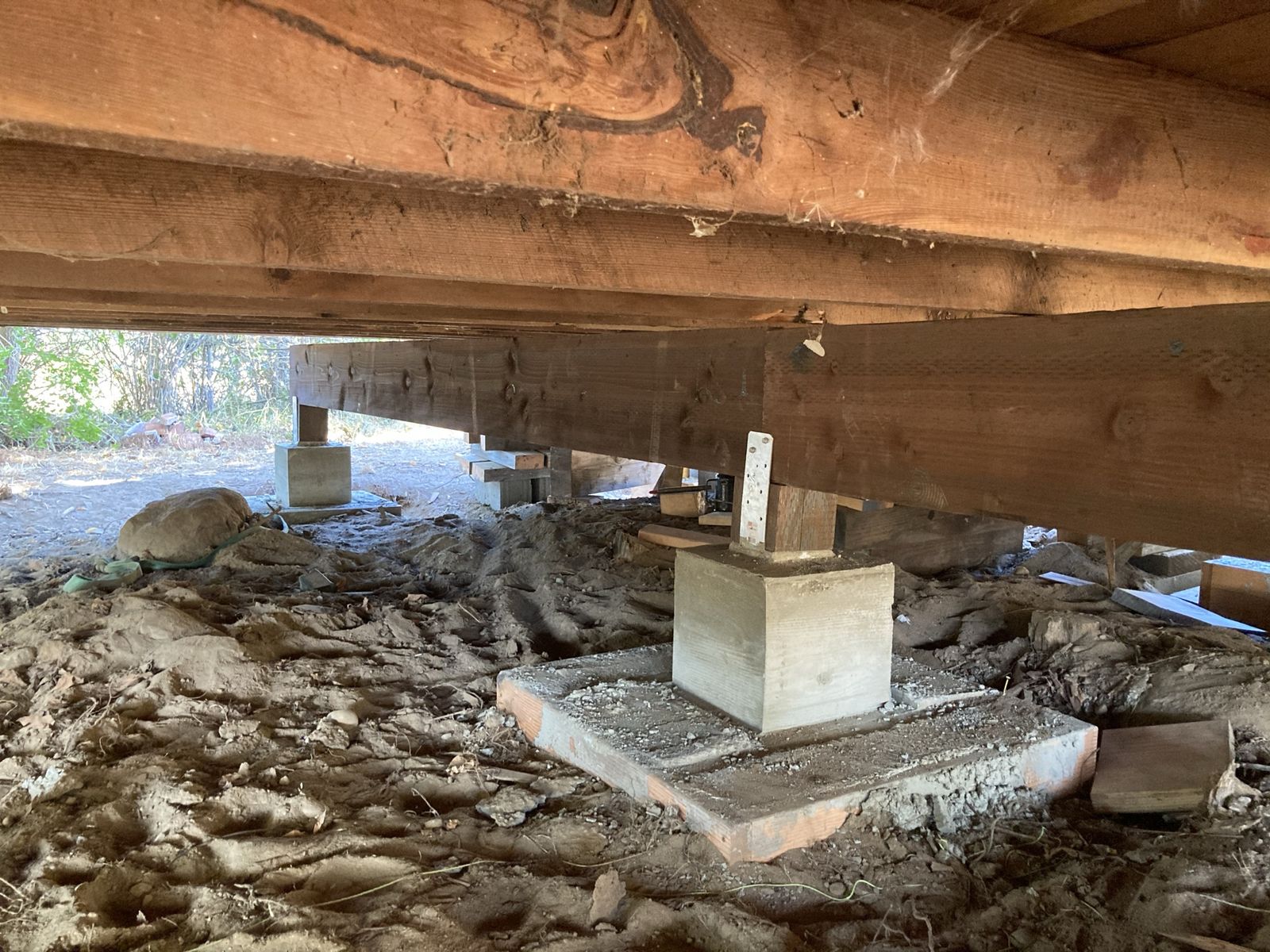
The house was sitting on a few boulders and charred cedar logs. Before we could do anything else it needed a foundation. To give a house a foundation you have to lift it off the ground. To lift a house off the ground you have to make sure it won’t come apart while you do. So we exposed the bones. Found the rot, found the weak points. Reframed where we had to and reinforced the rest.
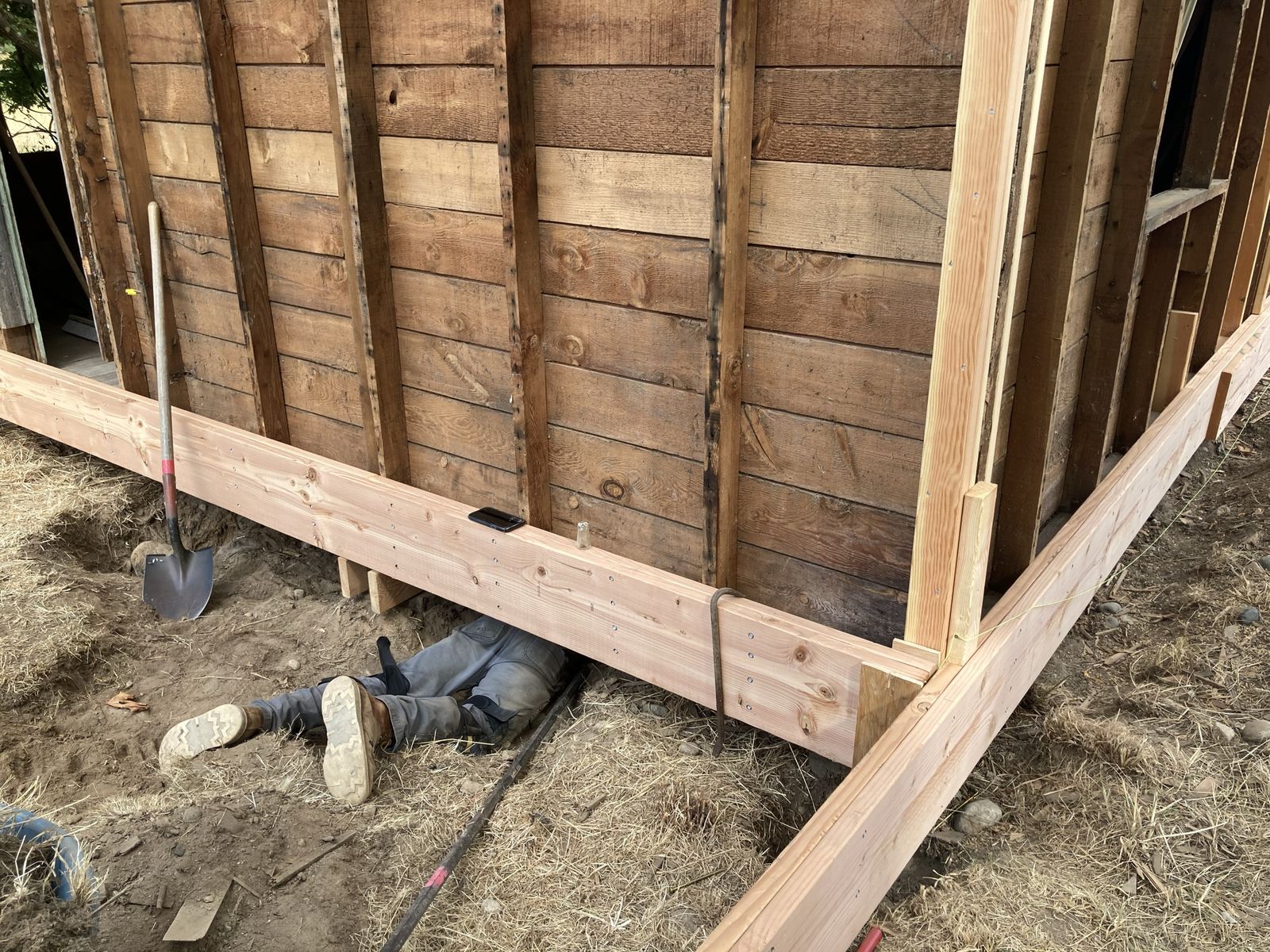
At some point we had to crawl under it. You go under the house on your elbows. Kicking up dust, the joists close over your back. That’s where we found the beers, a stash of tall boys. And past them, the first cat. It had crawled under and died and dried out. Mummified. Light and flat, teeth showing. It didn’t smell like anything. It had been there long enough to become part of the house. It became our mascot.
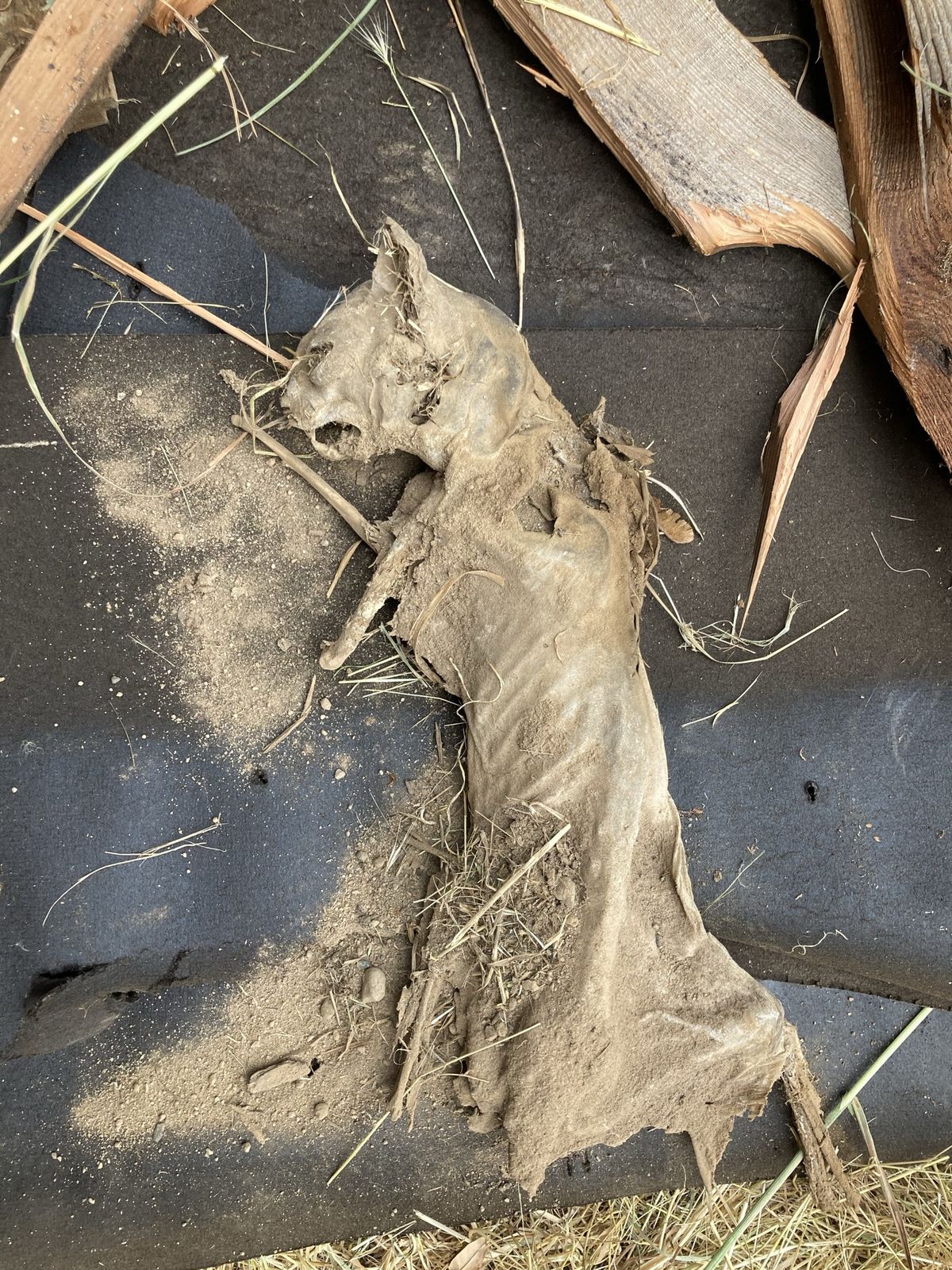
We put it in a tree to watch over us. The foreman.
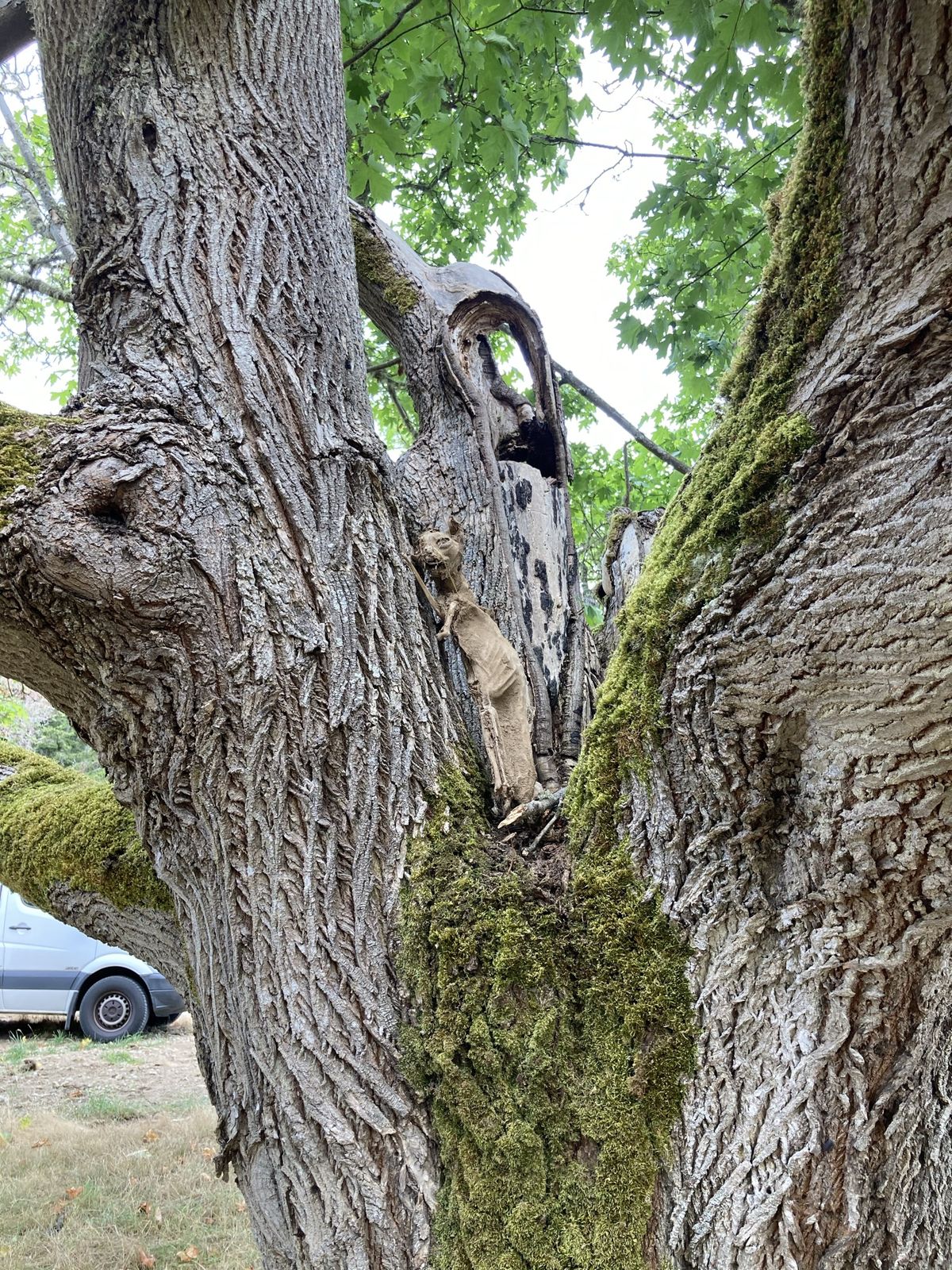
The place had been a hoarder’s house. The owner had spent a long time cleaning it out before we came, and he’d turned up enough treasures that he decided another shack on the property would be a museum. The cat would go in the museum when it was done supervising us.
We ran beams down the sides so we could lift the house like the pope. Bottle jacks and a tractor. A few inches at a time, cribbing under it as we went. The house came up slow. It creaked. It settled. It made sounds I’d never heard a house make. By the end of the day we had a house off the ground.
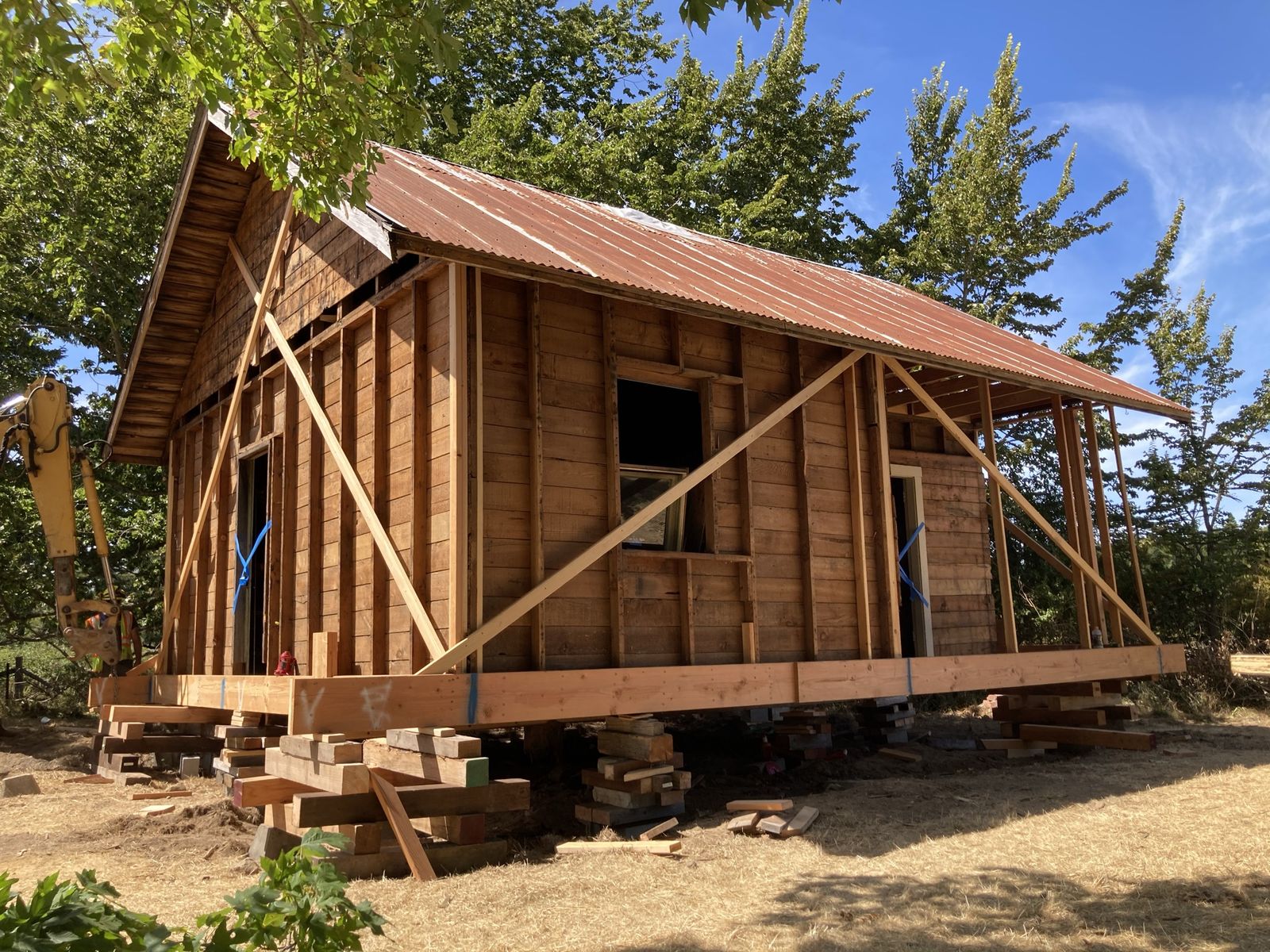
We stood in the field and looked at it up there on the cribbing. The next thing was to make the foundation.
One rainy morning I was late. I took the corner near the house too fast, the road slick, and there in the middle of it was a dead deer. I swerved and lost control and went into the ditch. There was a sign for the turn that said 25. I hit it at 45. The sign bounced me out of the ditch and back onto the road, and I bounced the sign up over the fence and into the field.
The plumbers were right behind me and saw the whole thing. When we parked they laughed at me for a good long time. Then they crawled under the house and welded copper pipe and sang Taylor Swift to each other all afternoon.
A few days later I drove past the county crew putting the sign back up. I kept driving.
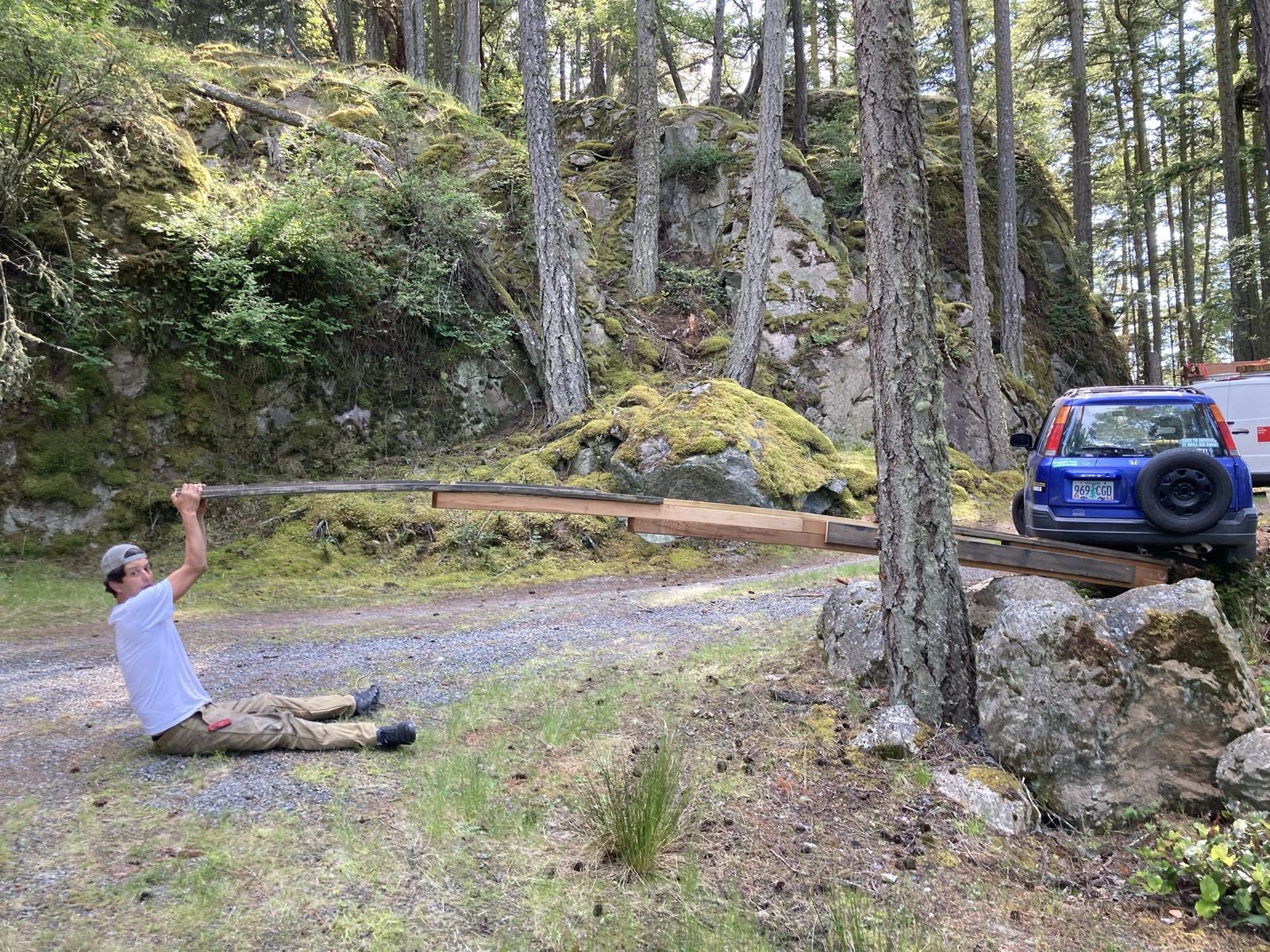
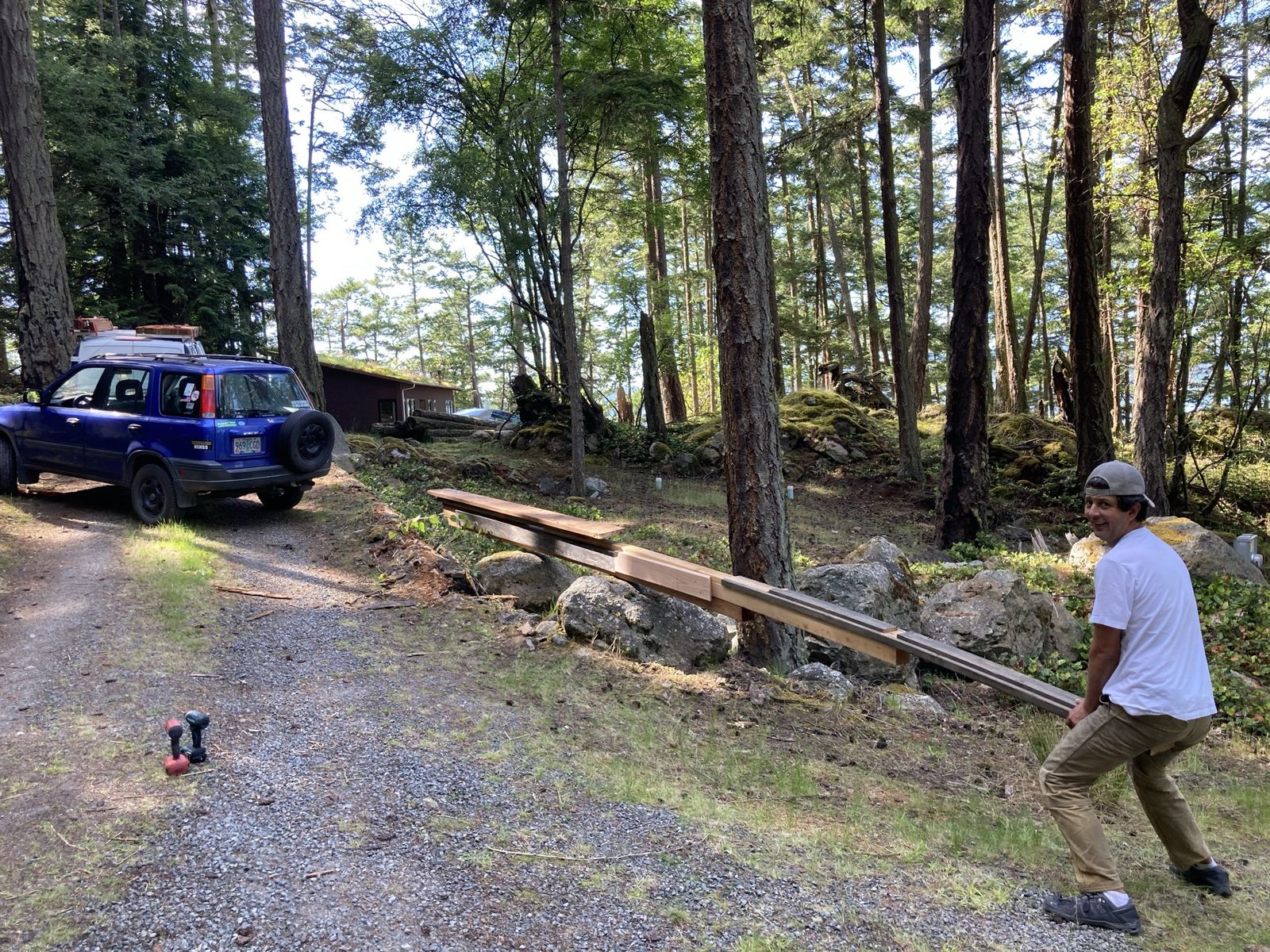
It wasn’t the first time that summer. Earlier I’d backed off a driveway and got high centered, hung up on the frame with the wheels spinning, Charlie blocked in behind me. He laughed and called me a handful of things. We tried to tow me out with ratchet snaps and they snapped under tension. Then we had the bright idea to build a lever. We took every piece of lumber on the site and lagged it all together into one big lever. Then I floored it and Charlie levered.
The summer went on and back at the cabin we were framing.
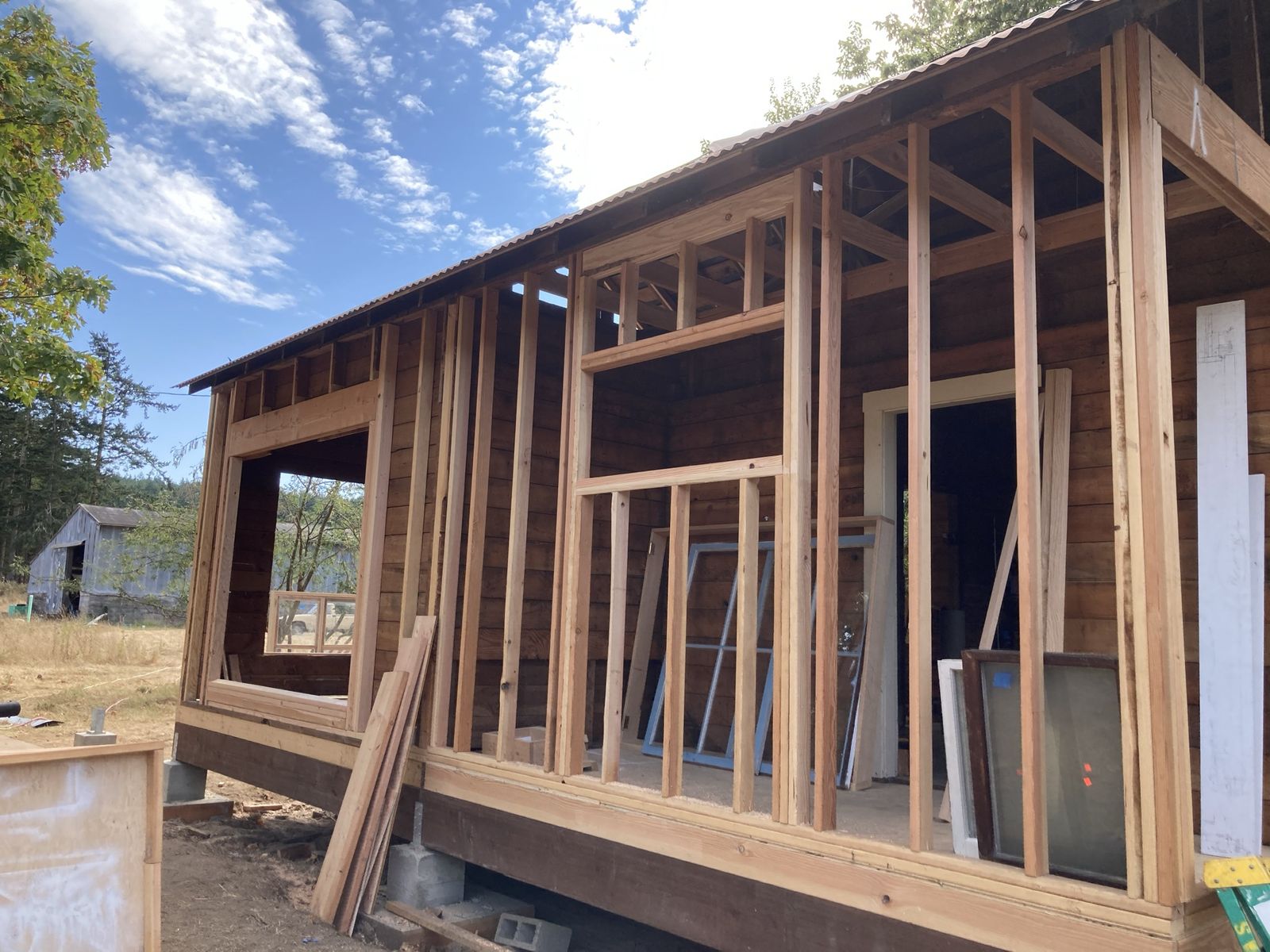
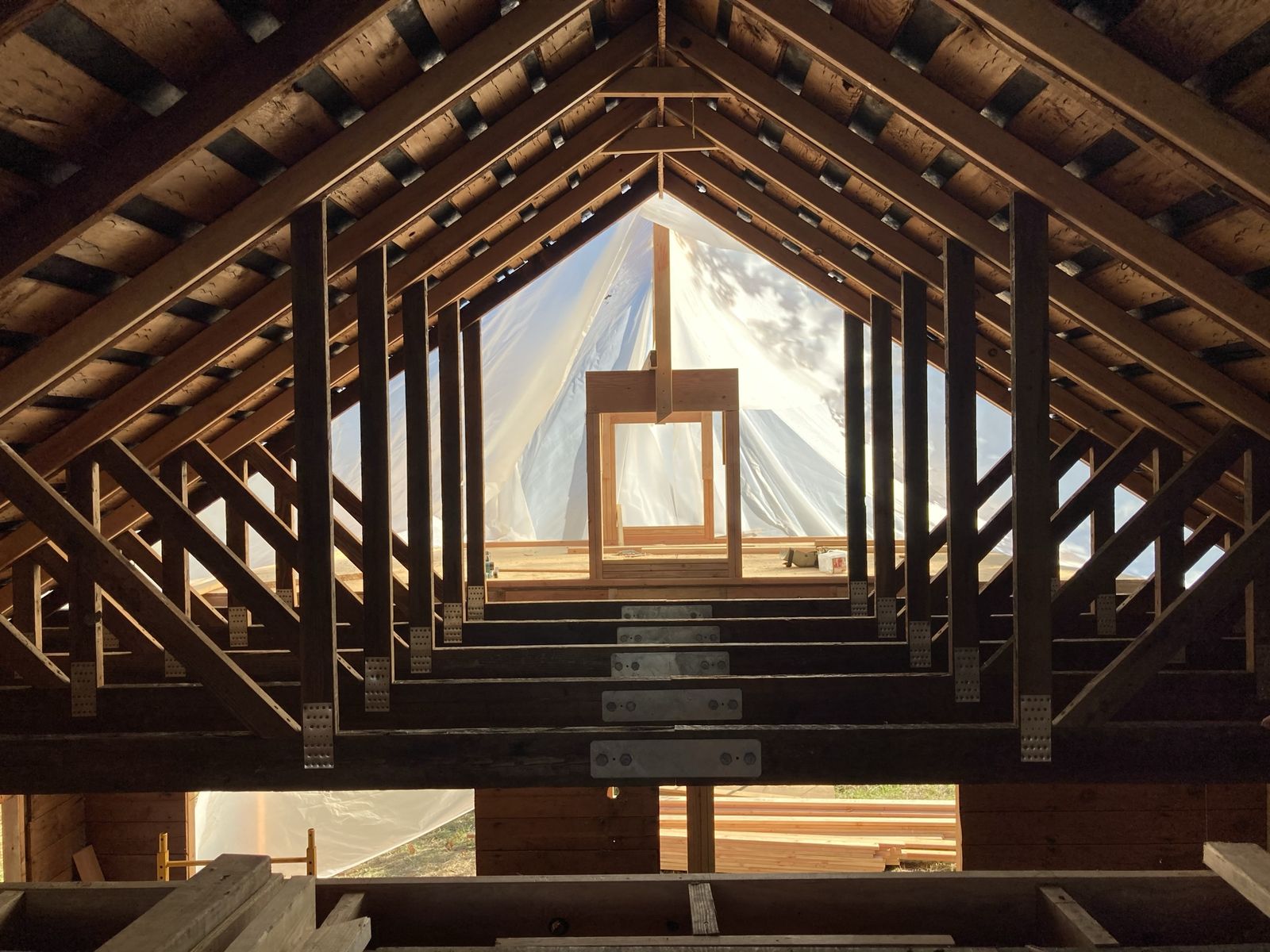
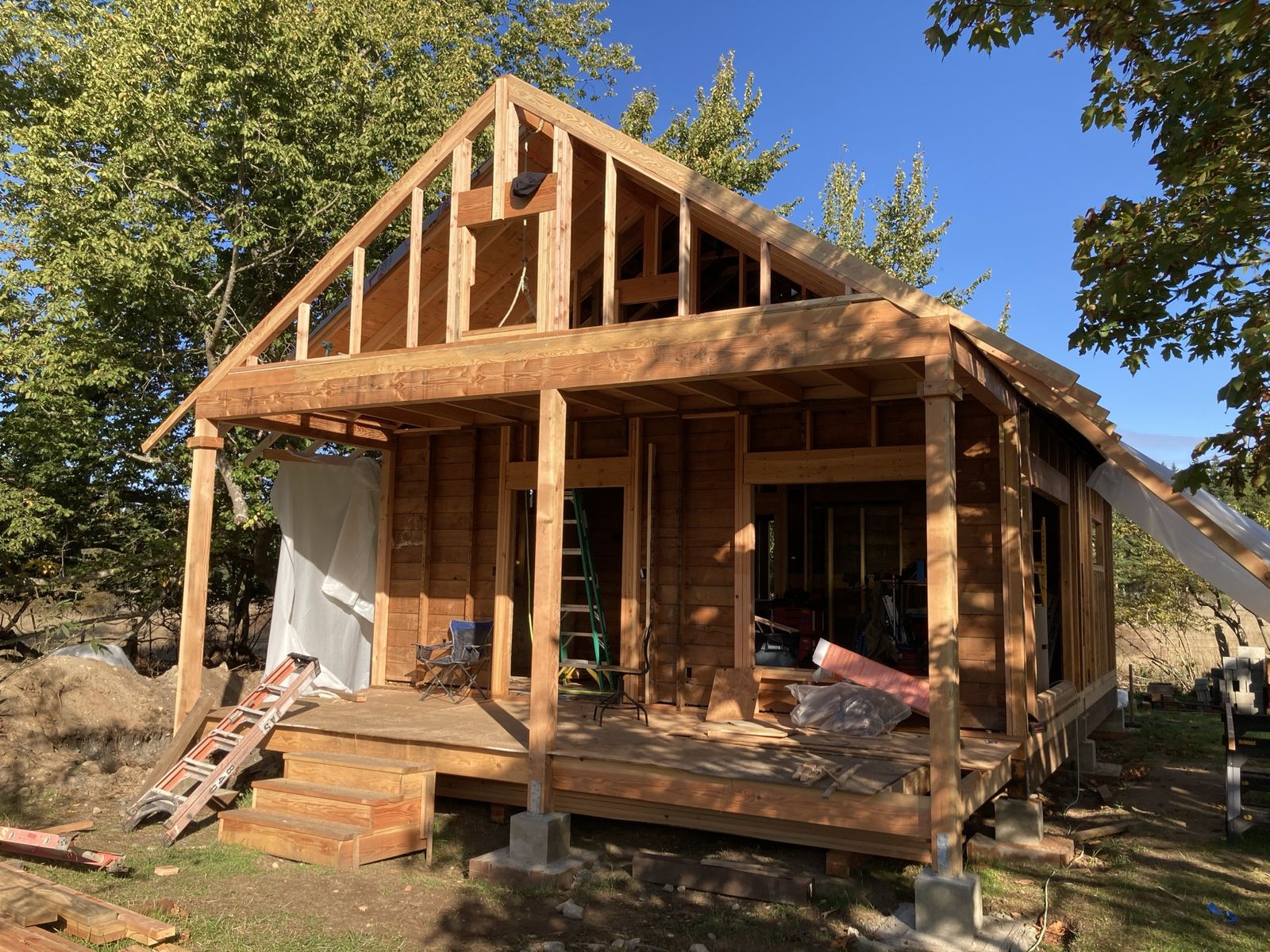
This was when I left. I was going back to Bellingham, back to school. I said goodbye to Carl and Michael and packed my things and left the framing standing in the field.
I saw the finished photos later. I knew what it had looked like the day we pulled up. That was enough. The team saw it through. The cat saw it through.